「Transmission 8: TATHATĀTHAW」
Anonymous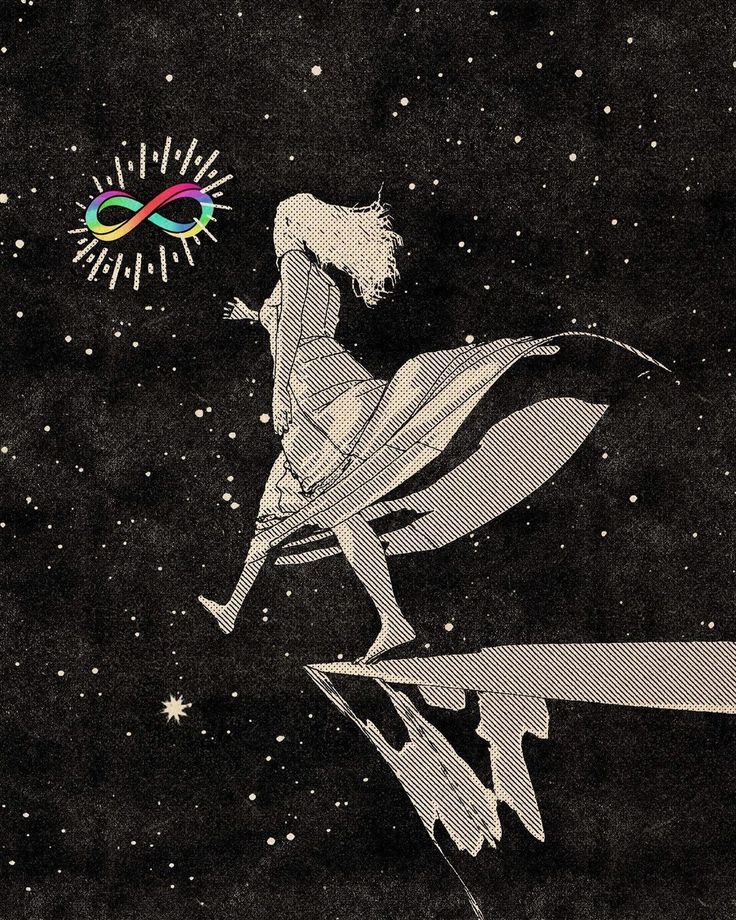
Steeped in his sorrow, Pierrot the pantomime sat on a stone above the dark waters of an icy river. That mournful image from the outer scenery had long since become an inseparable part of his inner essence.
“With sorrow I’ve been kin since early years, and between us two, sorrow, no parting nears”...
However, this is not about the despair from whose heart a story is written; it is, rather, one that by its very nature strives for conclusion. And not without reason — “all life is a continuation of suffering, and joy within it is a cheap farce, a carnival of primitive desires.”
The day, cutting with its greyness, imperceptibly gave way to the yawning blackness of night; it grows dark quickly here at this time of year. He seemed not to feel the cold anymore.
“This time for sure,” he said quietly, fidgeting with a rope, long since tied into a noose.
This snare had become his faithful companion not a day, nor even a month ago; he always carried it in his pocket and had even occasionally tried to use it, though unsuccessfully, as one might guess. Either the branch of the dry tree it was looped over would prove unreliable, or his own hands would, instinctively, jerk his neck from its embrace at the very last moment.
All in all, even in this, the sad performer had no luck. “But this time for sure.”
“Couldn’t be surer,” came the sneering reply.
Well then, I have finally and irrevocably lost my mind, thought Pierrot, watching as the rope in his hands continued to speak, using its own loop as a mouth...
“Really now, I’m more likely to finally fray into fibers in your hands than you are to truly make use of me.”
“You know the sincerity of my intentions, sister in sorrow, you’ve been with me all this time, but even you laugh at my plight?” Pierrot replied, grinning sadly at his own madness. “Do you think my burden is light?”
“No sin in laughing at a fool,” the Rope continued. “And it’s not about the laughter. It’s that you mistake logic for its caricature. Are you sure you’ve found the truth? Show me this truth of yours! In what form does it appear? As stupor? As a refusal of the very movements made even by this stone beneath you — for it falls into the planet’s depths, though you don’t see it?”
Pierrot winced.
“The truth is that everything is meaningless. Any action is merely throwing wood on someone else’s fire. I don’t want to be wood anymore.”
“Bravo!” hissed the Rope, and its fibers seemed to tense. “So you’ve already decided that you are the wood. Excellent. And who, then, is throwing it? If there is no one to throw, there is no process. You’re just lying there rotting, calling it wisdom. Your inaction is not freedom from the game. It’s the most passive and foolish form of participation in it. You haven’t left the carnival, Pierrot. You’ve simply closed your eyes and frozen in its dustiest corner, imagining you’ve vanished.”
“I have realized the illusion,” Pierrot declared defiantly. “Everything is suffering. The logical conclusion is to cease participating in it.”
“Oh, yes!” The Rope swayed in the wind, as if laughing. “The most logical one! How simple: discovered the house is on fire — and decided the best way to put it out is to lie down and burn first. Brilliant! Did you even ask if the house is truly burning? Or is it just a play of light and shadow that you, in your fear, declared to be flame? Are you sure you realized the illusion, and didn’t just get scared of its scenery?”
A cold wind tore from the river, but Pierrot didn’t stir. The Rope’s voice grew harder.
“Listen, would-be sage. You say: ‘Everything is suffering.’ But suffering is a relationship. Pain exists, yes. A wound hurts. The cold burns. But suffering is when you tell the wound, ‘You are mine,’ and tell the cold, ‘You have come for me.’ You have not freed yourself from the illusion of ‘I.’ You have elevated it to an absolute and now sacrifice everything to it, including the possibility of simply standing up and getting warm. This is not the negation of ego. This is its most refined incarnation — the ego of the martyr, the ego that is so beautiful in its perishing. And in its absurdity.”
Pierrot clenched the rope until his knuckles turned white.
“Then what should I do? Participate in this farce? Smile and bow?”
“I am not telling you what to do,” the Rope cut in coldly. “I am merely pointing out your contradiction. You believe your inaction is a consequence of freedom. That is a lie. It is a consequence of fear. Fear of making a mistake, fear of becoming ‘wood’ again, fear of looking a fool at that very carnival. You are frozen because you are afraid to take a step in the wrong direction. But the paradox is that a non-step is also a step. And it leads straight into the dead end you have already adorned with your gloomy banners.”
It fell silent, letting the words soak in.
“To realize the illusion does not mean to turn toward the wall. It means to see that the walls are also part of the illusion. And then one can pass through them. Or at least stop beating one’s head against them, considering it a feat. Your noose is not a tool of liberation. It is the final act of clinging — clinging to the idea of your own end as the only correct finale. What a pity that you, pretending to be a spectator, never truly discerned the plot.”
Pierrot did not answer. He sat, gazing into the darkness where water merged with sky. The noose in his hand no longer seemed either a faithful companion or a weapon. It was just rope — cold, coarse, silent.
“So what then?” he finally whispered.
“So then,” repeated the Rope, without its former sneer. “Throw me away. Or don’t. It doesn’t matter. But stop making a philosophy out of inaction. Even the stone beneath you lives a more conscious life: it falls without thinking of the fall. And you… you are simply afraid of the flight.”
And in the silence that followed these words, Pierrot felt the cold for the first time in a long while. The real, piercing, living cold of the night. And it was not suffering. It was simply a sensation.
𒐪 𒐪 𒐪 𒐪
On the Analysis of Two States Arising from the Intellectual Acceptance of Non-Dual Concepts
Intellectual agreement with a model of reality as a subjectless process, in which a separate "I" is a temporary configuration of interacting elements, can lead to two fundamentally different existential outcomes.
These outcomes are determined not by the correctness of understanding, but by the direction in which the energy of consciousness is released after such understanding.
The first state is destructive paralysis. The realization of the illusory nature of personal struggle is interpreted as evidence of the meaninglessness of any action. The driving force ("craving") does not dissolve but is blocked, colliding with the intellectual conclusion that "everything is meaningless."
This generates apathy, which is not an absence of desire but its perverted form — the desire for non-desire. Motivation to participate in practical activity disappears, including basic care for the psychophysical complex.
This state represents not liberation, but a new, more subtle configuration of suffering, where the role of the "I" is played by the schema of "the one who has comprehended futility."
The second state is liberating non-attached action.
Here, the same realization leads to a different result: the removal of internal opposition to the flow of phenomena. What ceases is not activity, but identification with the actor and the dramatization of the process. Biological and social functions continue, but are performed as natural, apt responses to circumstances, devoid of personal involvement.
Energy, no longer bound by the narrow goals of the ego, manifests as spontaneous and compassionate activity.
Action is preserved, but its context changes: it becomes an instrumental and skillful response to conditions, rather than a battle for a result.
The criterion for distinction is the vector of energy. In the first case, energy turns inward, feeding the loop of self-reflection and inaction.
In the second — it is directed outward, toward impersonal participation in the flow of cause and effect.
The second state corresponds to the principle of action after awakening described in classical texts: "There is no doer, but there is doing; there is no experiencer, but there is experiencing."
Thus, the crucial transition is not the understanding of the unreality of the "I" itself, but the subsequent overcoming of the conceptual trap that replaces one attachment (to personality) with another (to the idea of its absence).
Genuine cessation of suffering occurs not upon refusal of activity, but upon cessation of clinging to any fixed position within it, including the position of the observer who rejects the world.
Functioning continues, but it no longer creates painful knots, for it is devoid of the root — the notion of an acting agent.
Thank you for being on air. Stay tuned on the wave.